
Sometimes the good old days were not so good.
Remember the late 1970s?
Anyone who lived through those years experienced what it was like to see inflation eat through their paychecks. 4 decades since then, the world has lived in a low inflation season.
Economists today argue amongst themselves that inflation rates have fallen too low.
Are they crazy?
Their biggest worry apparently is that this might trigger a “disastrous downward spiral”.
In Oct ‘22 the US Inflation Rate was at 7.75%. Today (Oct ‘23) it sits at 3.67%.
For the statistically inclined, here’s a nice chart.
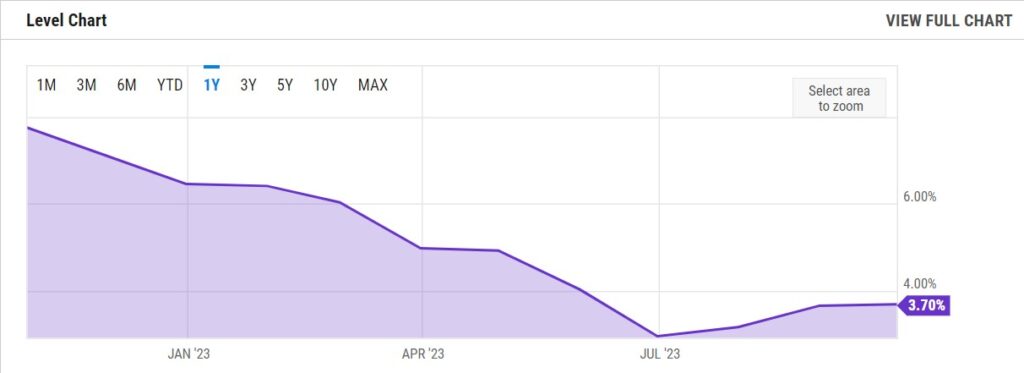
Now you know that I didn’t make the numbers up. So a new question might come up in your head.
What should I, a blue-collared biz owner/decision maker do?
Good question. Keep reading.
I’m going to give you 15 strategies to help your business or organization to stay afloat.
But before I continue, realize this:
You have NO control over our nation’s economic levers.
However… You can still call the shots and make strategic decisions to navigate and mitigate the impact of unstable inflation rates.
1. Cost Control and Efficiency:
As a business owner, take a close look at your utility bills. Consider upgrading to energy-efficient lighting, heating, and cooling systems.
In my experience, a small manufacturing plant was able to reduce monthly electricity costs by 20% by switching to LED lighting and upgrading their HVAC system.
These efficiency improvements not only cut costs but also made the workplace more comfortable for employees.
2. Pricing Strategy:
Imagine you run a plumbing business. With increasing material costs, you need to adjust your pricing. Instead of a blanket increase, focus on the most affected services.
For instance, if the price of copper piping rises, you might raise the rates for pipe replacement jobs while keeping rates steady for basic repairs.
3. Diversify Suppliers:
If you operate a construction business heavily reliant on one supplier for building materials, consider sourcing materials from two or more suppliers.
This diversification can provide negotiating leverage and ensure a more reliable supply chain, reducing the impact of price fluctuations from a single supplier.
4. Inventory Management:
In your auto repair shop, managing inventory efficiently is crucial. Overstocking on specific car parts that may become more expensive due to inflation can tie up your working capital.
Implement a just-in-time inventory system to order parts as needed and minimize carrying costs.
5. Negotiate Contracts:
If you run a landscaping business, contracts with your clients are key. In a period of inflation, communicate with your clients about the need for contract adjustments to account for rising fuel, equipment, and labor costs.
Honesty and Transparency in this case build trust.
6. Invest in Technology:
Consider adopting GPS tracking systems in your fleet of delivery trucks. This not only helps improve route efficiency but also lowers fuel consumption.
One plumbing company I worked with reduced their annual fuel expenses by 15% by investing in this technology.
These days even Artificial Intelligence could be a huge help.
Head over to https://theresanaiforthat.com/ and find the best tool for your use-case.
7. Employee Compensation:
Let’s say you manage a manufacturing plant. Instead of across-the-board raises, consider implementing a performance-based bonus system for your workers.
This way, employees are rewarded for their productivity, which helps to offset the impact of inflation on labor costs.
8. Employee Training and Development:
Invest in training programs for your employees, such as safety training.
For instance, in a factory I consulted for, the implementation of a comprehensive safety training program had remarkable results. Not only did it reduce workplace accidents, but it also had a ripple effect on overall efficiency, leading to a decrease in costs associated with worker compensation claims.
But don’t stop there. Go a step further and invest in leadership programs as well.
I offer a personalized 1-on-1 training program for leaders, whether they’re in managerial roles or even the top executives running the show.
And you could be already interested in exploring how this can benefit you, I invite you to click here for our free first chat together:
https://henrychidgey.com/discovery-call/
9. Energy Efficiency:
As the owner of a bakery, you can enhance energy efficiency by upgrading ovens and refrigeration units. If I worked with A bakery, I would have them replace their old ovens with energy-efficient models and implement proper insulation, reducing monthly energy expenses by 30%.
10. Cash Flow Management:
In your plumbing business, manage cash flow by streamlining your invoicing process. Send invoices promptly, offer early payment discounts to clients, and diligently follow up on overdue payments.
This ensures that you have working capital to cover expenses and growth opportunities.
11. Review Financing Options:
Consider seeking a line of credit with a competitive interest rate to cover working capital needs during times of inflation.
With this financing, you can maintain operations while effectively managing your cash flow.
12. Risk Management and Insurance:
Let’s say you run a roofing company. Review your insurance coverage to protect against potential supply chain disruptions.
Ensure you have access to alternative suppliers in case of material shortages due to inflation.
13. Customer Communication:
Running a landscaping business, you decide to adjust your pricing to reflect increased costs. Inform your customers about these changes in advance and explain how the adjustments are necessary to maintain the quality of your services. Open communication builds trust and understanding.
14. Seek Government Assistance:
As a construction contractor, look into government grants or subsidies that support energy-efficient construction methods. These incentives can help offset the costs of using materials that are both eco-friendly and cost-effective.
15. Long-Term Planning:
If you own a small manufacturing business, plan for long-term resilience by diversifying your product offerings. Consider expanding into related industries to reduce vulnerability to inflation in a single market.
For instance, a company producing office furniture could explore opportunities in the home office furniture market.
Each strategy is tailored to the unique challenges and opportunities in various industries.
While inflation may be a formidable challenge, a well-thought-out approach will help your business not only survive but thrive in these uncertain times.










0 Comments